Blood Oath: Three Kingdoms
- 4.2
- Rating
- 10.00K
- Installs
- Free
- Price

 Analysis by App-foxy
Blood Oath: Three Kingdoms is a free card game from YOLO AI PTE. LTD. that aims to turn the famous Three Kingdoms setting into a compact, character-driven strategy experience. I found its strongest appeal in the way it gives each match a clear sense of purpose: you are not simply placing cards and waiting for a result, but trying to understand how your choices affect the next exchange. The presentation leans toward a Teen audience, and the “Blood Oath” identity suggests a darker, more dramatic take on the setting than a light party card game.
The game is available for Android devices running at least version 7.0, and its current version is 1.0.5. It is free to install, although optional purchases range from $0.99 to $99.99 per item. That combination makes the first decision fairly easy: there is little reason not to try it if you already enjoy mobile card games, but you should approach the longer progression with a clear idea of how much you want to spend. After spending time with it, I see a game that is more interesting when treated as a tactical routine rather than as a quick distraction.
Early goals make the first sessions feel purposeful
The early hours of a card game can be awkward when the player is given a large collection, too many menus, and no obvious reason to care about the next match. Blood Oath: Three Kingdoms works best when I focus on a small immediate target: learn what the available cards are trying to do, recognize which combinations feel dependable, and use each encounter to improve one decision at a time. That approach keeps the opening from becoming a blind search through a collection.
You May Also Like

 AccuWeather: Weather Radar
AccuWeather Review: A Quick, Clear Forecast for Everyday Decisions
For everyday plans, the best forecast is the one you can understand quickly. AccuWeather makes rain timing, radar, and local conditions easy to act on, with a few trade-offs.

 Hill Climb Racing
Why Hill Climb Racing Still Turns Crashes Into One More Run
A tiny car, a bumpy hill and one more upgrade: Hill Climb Racing keeps resurfacing because its simple chaos makes every near-miss feel personal.

 AliExpress - Shopping App
AliExpress Makes Global Shopping Feel Personal, but Shoppers Bear the Risk
AliExpress turns a global marketplace into a pocket-sized discovery engine. Its reach is useful, its shopping loop compelling, and its trade-offs easy to miss.

 Lords Mobile: Kingdom Wars
Lords Mobile Is a Kingdom-Building Routine, Not a Quick Match
A case-by-case verdict on the building, battles, device demands, and social commitments that make Lords Mobile rewarding for some players and exhausting for others.

 PDF Scanner app - TapScanner
TapScanner Makes Paperwork Easier to Capture, Check, and Share
TapScanner makes scanning with a phone feel less like a rescue operation and more like a dependable step in getting work done. Its capture tools are useful, though not flawless.

 Block Blast!
 Shows How Much a Puzzle Game Can Leave Out
A quiet grid game shows why puzzle players increasingly value instant clarity, repeatable skill and low-pressure play—and where the genre still needs to catch up.
More From Our News Desk
View All News


The Three Kingdoms theme helps here because it gives the cards a natural identity. Even before a player becomes deeply invested in optimization, the historical setting provides a reason to remember characters and factions. I found that more useful than a purely abstract deck, because it gives every new card a little context. The practical tip is to avoid changing everything after one disappointing match. Keep the parts of a deck you understand, change one uncertain element, and use the next game to judge whether that change actually helped.
This is also where the game’s free-to-play structure deserves attention. A new player may be tempted to chase every attractive unlock or treat a purchase as a shortcut to understanding the game. I would not recommend that. Early progress is more valuable when it teaches you the rhythm of the cards. Spending before you know whether the game’s decision-making suits you can create a collection that looks stronger without making your play more thoughtful.
For a realistic everyday scenario, imagine having a short break after work and wanting something more involved than a puzzle but less demanding than a long role-playing session. A single focused run through Blood Oath: Three Kingdoms can fit that mood, especially if your goal is to test one deck idea rather than force a perfect result. The game is less suitable when you want a completely relaxed experience with no learning curve, because card decisions become less satisfying if you are unwilling to remember what worked in the previous encounter.
What to learn before chasing bigger rewards
My first useful habit was to separate “a card I like” from “a card that improves the whole plan.” A dramatic character or powerful-looking effect can be appealing, but a deck becomes easier to pilot when its cards support a recognizable approach. If you are still learning, write down a simple question before a match: am I trying to build pressure, survive until a later turn, or create a particular sequence? That small bit of discipline turns random experimentation into a repeatable test.
Another worthwhile habit is to notice when a loss came from a poor decision rather than an unlucky draw. Those two problems need different responses. If the deck repeatedly lacks an answer, adjust its structure. If the answer was available but used too early, keep the deck and change your timing. This is one of the less obvious strengths of a themed card game: the setting can encourage attachment to individual characters, but the real improvement comes from understanding their role together.
The game is approachable for someone who enjoys learning through repetition, but it is not an ideal pick for a player who wants every outcome to feel immediately controllable. Card games naturally introduce uncertainty, and Blood Oath: Three Kingdoms asks you to accept that a good plan can still need adaptation. I consider that a positive when the player has patience, though it can feel frustrating if you prefer direct action games where skill is visible from moment to moment.
Progress signals, challenge, and the pressure to keep playing
I judge progress in Blood Oath: Three Kingdoms less by how quickly the collection grows and more by whether I can explain why a match went well or badly. That distinction helps separate a satisfying challenge from a loop that simply encourages another session. It also gives me a practical way to decide when to pause, which matters even more when the game is shared at home.
Progress feels best when it changes how you play
The most convincing progress signal in a card game is not simply seeing a larger number on a profile. It is recognizing a situation that previously caused trouble and handling it more cleanly. Blood Oath: Three Kingdoms has a reason to keep returning when new cards, improved familiarity, and better sequencing make matches feel more deliberate. I paid more attention to whether my decisions were becoming clearer than to the speed of any individual unlock.
That distinction matters because collection growth can create the illusion of improvement. If a new card solves a problem automatically, it may help the next match while teaching very little. A stronger long-term routine is to ask what the new addition changes: does it give the deck a safer recovery option, make an existing combination more reliable, or merely add another powerful-looking choice? The answer tells you whether the unlock belongs in your regular setup or should remain an experiment.
I also recommend keeping a small rotation instead of rebuilding from scratch every time the game offers something new. Maintain one familiar setup for measuring progress and one flexible setup for testing. This gives you a useful comparison. If both feel weak, the issue may be your understanding of the current challenge. If the experimental version improves while the familiar one does not, you have learned something concrete about the direction your collection should take.
The game’s average rating is 4.2 from around 2.3 thousand ratings, while its install count is above ten thousand. Those figures suggest that it has found a real audience, but they should not replace your own test of the opening experience. Card games divide players sharply: some enjoy studying interactions, while others see the same process as repetition. I would treat the early free access as an opportunity to decide which side you are on before considering purchases.
The difficulty curve rewards patience more than rushing
Difficulty in Blood Oath: Three Kingdoms is most enjoyable when it asks for better planning rather than simply stronger cards. I prefer a challenge that makes me reconsider timing, sequencing, and the value of holding an option in reserve. When a match becomes harder, do not immediately assume that the answer is a new purchase. First check whether you are spending your most useful response too early or building a deck with too many cards that demand the same situation.
A practical way to manage the curve is to identify the point where your plan usually breaks. Perhaps you can establish an advantage but cannot protect it, or you can survive the opening but lack a convincing finish. Focus your next adjustments on that break point. This is more efficient than making broad changes after every loss, and it gives each new card a clear job. In my experience, this method also makes the game feel less dependent on luck because you are actively reducing the number of ways your plan can collapse.
There is a trade-off, though. A player who enjoys discovering a deck naturally may find this analytical approach satisfying, while someone who wants a quick sequence of victories may feel that progress slows once the basics are understood. The game’s Teen rating also signals that its tone is not aimed at very young children, so parents looking for a simple family card game should look elsewhere. The setting and presentation are better suited to players comfortable with a more dramatic fantasy interpretation of historical conflict.
Retention pressure is the part I would watch carefully
Like many free card games, Blood Oath: Three Kingdoms has a built-in reason to keep checking your collection and pursuing the next improvement. That can be motivating when each session has a meaningful objective, but it can also turn play into a loop of chasing the next unlock without enjoying the matches themselves. I think the healthiest way to approach it is to set a stopping point before you begin. Decide whether you are playing until you test a deck, complete a short personal goal, or learn one matchup, then stop when that goal is done.
This matters even more because the optional purchase range stretches from small items to much larger single-item spending. I would avoid making a purchase while frustrated after a loss. That is precisely when a shortcut feels most attractive and is least likely to answer the real problem. If you eventually spend money, do it because you already enjoy the core play and want to support a collection you understand, not because you are trying to erase the learning curve.
Another useful boundary is to judge the game by decision quality, not by how long it keeps you online. A longer session is not automatically a better session. If you are repeating matches without changing your plan, take a break and return later. This is especially helpful for players who enjoy competitive card games but dislike the pressure to treat every available reward as mandatory. Blood Oath: Three Kingdoms can work as a measured hobby, but it is less appealing if you want a game that never nudges you toward continued progression.
Who should install it, and who should skip it?
I would recommend Blood Oath: Three Kingdoms to players who enjoy themed card battles, gradual deck refinement, and the satisfaction of recognizing patterns over time. It is a good fit if the Three Kingdoms setting already interests you, but you do not need to be a history expert to appreciate the character-focused atmosphere. It also suits people who like using a free download to sample a game before deciding whether its long-term structure deserves attention.
I would skip it if you want a purely casual card game with almost no planning, or if you dislike free-to-play systems that include optional purchases. I would also choose a traditional tabletop adaptation or a simpler digital card game if your priority is playing with friends in a clearly defined local format. Blood Oath: Three Kingdoms is more appealing when you want a personal progression loop and are comfortable learning through repeated matches.
Compared with a standard solitaire-style card app, it offers more personality and more room for strategic experimentation, but it demands more attention. Compared with a large established competitive card game, its smaller install base may make it feel more like a focused discovery than a universally familiar community choice. I would choose the larger alternative if you need a huge ecosystem, extensive beginner resources, or a deeply established competitive scene. I would choose this game when the Three Kingdoms theme and compact card-focused routine matter more than breadth.
My progression verdict
Blood Oath: Three Kingdoms succeeds when progression is treated as a tool for learning rather than a checklist. The early goals are clearest when you concentrate on one deck idea, the progress signals are most meaningful when your decisions improve, and the difficulty curve becomes fairer when you adjust around a specific weakness. Its retention loop can be enjoyable, but only if you set your own limits and resist treating every purchase or unlock as necessary.
The game is free, supports Android 7.0 and later, and has reached current version 1.0.5. Those practical details make it easy to try, while the Teen content rating helps set the tone before installation. I would begin without spending, play long enough to decide whether the card interactions hold my attention, and keep notes on the situations that repeatedly defeat me. That approach gives the game a fair test and prevents the collection system from making the decision for you.
My final view is positive but measured. Blood Oath: Three Kingdoms is not the right card game for everyone, and its optional purchases mean it deserves a thoughtful approach. But if you enjoy turning a themed collection into a coherent plan, learning from losses, and returning with a more precise answer, it has a worthwhile foundation. The best reason to keep playing is not the promise of a bigger collection; it is the feeling that your next decision will be better informed than the last one.
For me, that is where Blood Oath: Three Kingdoms earns its place on a mobile device. It offers a dramatic setting, a free starting point, and enough strategic tension to reward patience. I would recommend trying it during a short, focused session rather than committing to a long grind immediately. If the process of testing cards and refining your response to difficult matches feels rewarding, the game can grow into a satisfying card hobby. If that process feels like work, you will probably be happier with a lighter alternative.
FAQs for Blood Oath: Three Kingdoms
01What is Blood Oath: Three Kingdoms?
Blood Oath: Three Kingdoms is a mobile strategy role-playing game inspired by the historical Three Kingdoms era. Players collect and upgrade famous warriors, form teams with different abilities, and fight through story stages, competitive battles, and other events. The game combines character progression, tactical positioning, equipment development, and resource management, making it more focused on long-term team building than simple one-touch combat.
02Is Blood Oath: Three Kingdoms free to download and play?
The game is generally available as a free download, but it may include optional in-app purchases. These purchases can provide premium currency, character resources, upgrade materials, or limited-time packages. You can make progress without paying if you play regularly and manage resources carefully, although spending may speed up development or make it easier to compete in certain events. Check the store listing for current purchase and age-rating details.
03Does Blood Oath: Three Kingdoms require an internet connection?
Yes, an active internet connection is normally required for Blood Oath: Three Kingdoms. Online access is used to save progress, load events, deliver rewards, connect to competitive modes, and synchronize your account with the game servers. Because of this, the game is not a good choice for completely offline play. A stable Wi-Fi or mobile-data connection is recommended, especially during battles, updates, and account-related activities.
04Is Blood Oath: Three Kingdoms suitable for beginners?
Blood Oath: Three Kingdoms is approachable for beginners because its early stages introduce the main systems gradually, including summoning, upgrading heroes, arranging formations, and completing missions. However, the number of currencies, upgrade options, factions, and event rewards can feel confusing at first. New players should avoid spending all resources immediately, follow the beginner objectives, and focus on a balanced team before investing heavily in several characters.
05Can I play Blood Oath: Three Kingdoms without spending money?
Yes, free-to-play players can enjoy Blood Oath: Three Kingdoms and complete much of the available content without making purchases. Daily missions, login rewards, achievements, story progress, and events provide useful resources. The main limitation is progression speed: players who spend may obtain upgrades or rare heroes sooner. Patient resource management, consistent activity, and learning which characters work well together are important for remaining competitive without paying.
Pros
- Rich Three Kingdoms setting with recognizable historical characters.
- Strategic combat rewards careful team composition and timing.
- Frequent events provide extra objectives and useful upgrade materials.
- Guild features encourage cooperation and make progression more social.
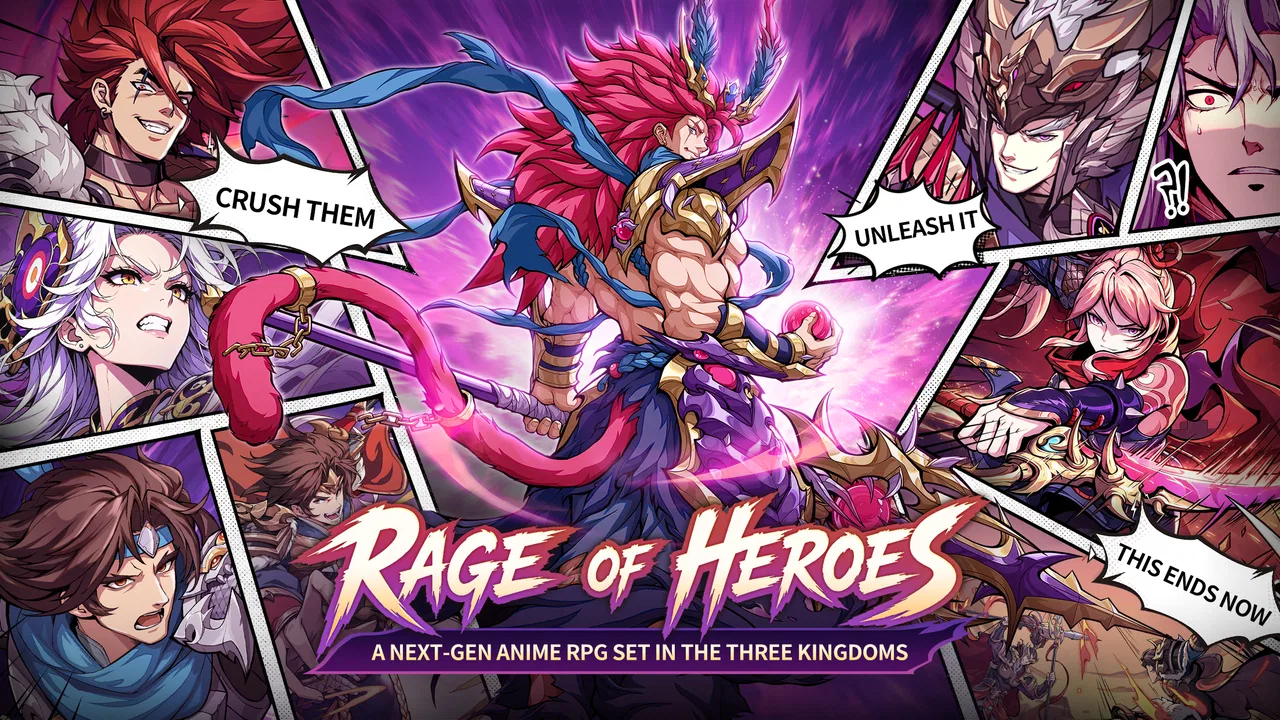
- Stylish character designs and skill animations add visual appeal.
Cons
- Progress can become heavily dependent on upgrading favored heroes.
- Large rosters may make resource management confusing for new players.
- Competitive modes can feel uneven when facing highly developed teams.
- Auto-battle reduces the sense of control during some encounters.
- Limited-time events may pressure players to log in frequently.

Blood Oath: Three Kingdoms
Gallery